
The Outage Lasts Longer Than The Storm
After Hurricane Maria struck Puerto Rico in September 2017, it took about 11 months for the utility to report power restored to every home that lost it. After Hurricane Dorian hit the Bahamas in September 2019, Abaco was still only partly reconnected nearly three months later. The clinic, airport and water plant came back first, while whole communities waited.
For a resort, those weeks without grid power and municipal water are when guests cancel, staff can't work and the property's reputation is decided. The question isn't whether the grid goes down. It's how long you can run without it.
Make Fuel The Backup, Not The Lifeline
Most Caribbean electricity comes from imported fossil fuels: about 91% of the region's power in 2024. Backup generators depend on the same supply chain. When ports close and roads are blocked, diesel deliveries stop just when you need them most. A resilience plan that runs on fuel alone has a deadline built in.
Know Your Critical Loads
You don't need to power the whole property through an outage. You need to power what keeps people safe and the business open. Start with a list:
- Water: production, pumping and pressure for drinking, cooking and sanitation
- Refrigeration: food and medical storage
- Communications: phones, internet, radios and guest messaging
- Safety: lighting, security and fire systems
- Kitchen: a minimum service for guests and staff
- Staff housing: the team you need on site to recover
Put a daily kilowatt-hour figure and a gallons-per-day figure next to each line. Those two numbers size everything else.
Store Water, Then Make It
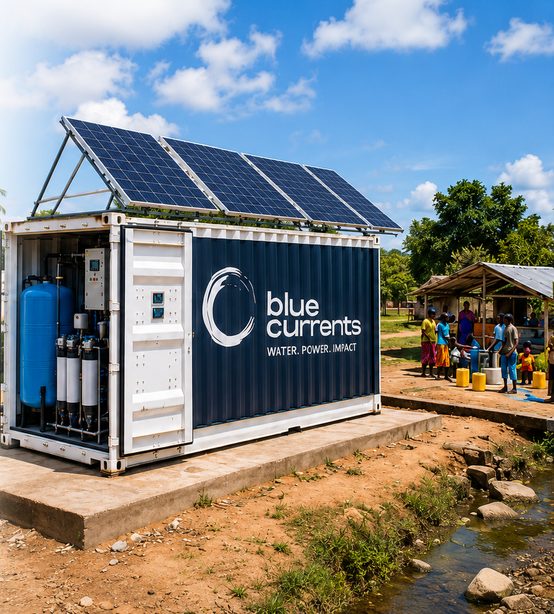
Storage buys time. Producing water on site buys independence. A practical plan uses both: enough stored water to ride out the storm itself, and an on-site treatment system that refills the tanks once the weather clears. Solar-powered desalination or well treatment means you're not waiting on a municipal plant or a water barge.
Protect The Equipment Before Landfall
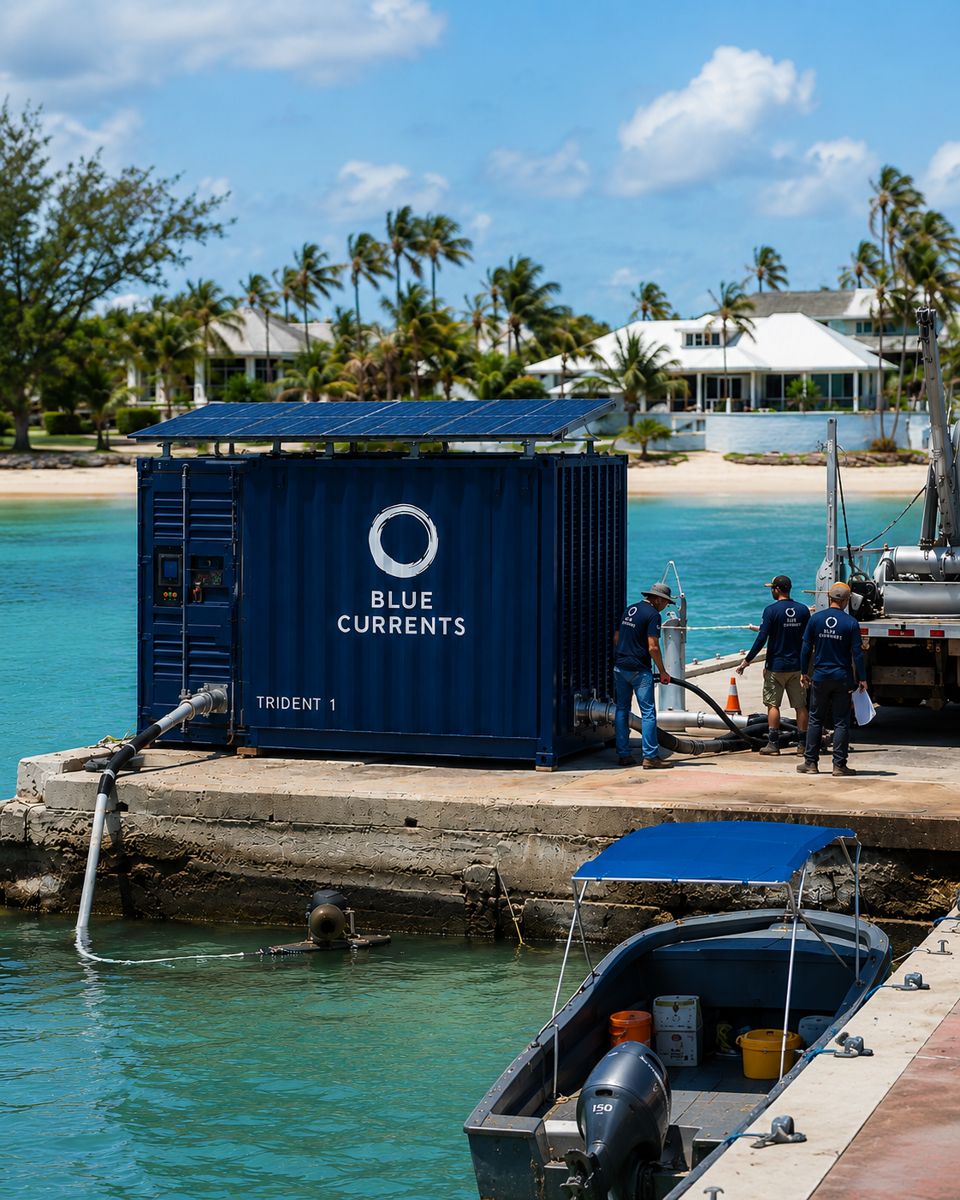
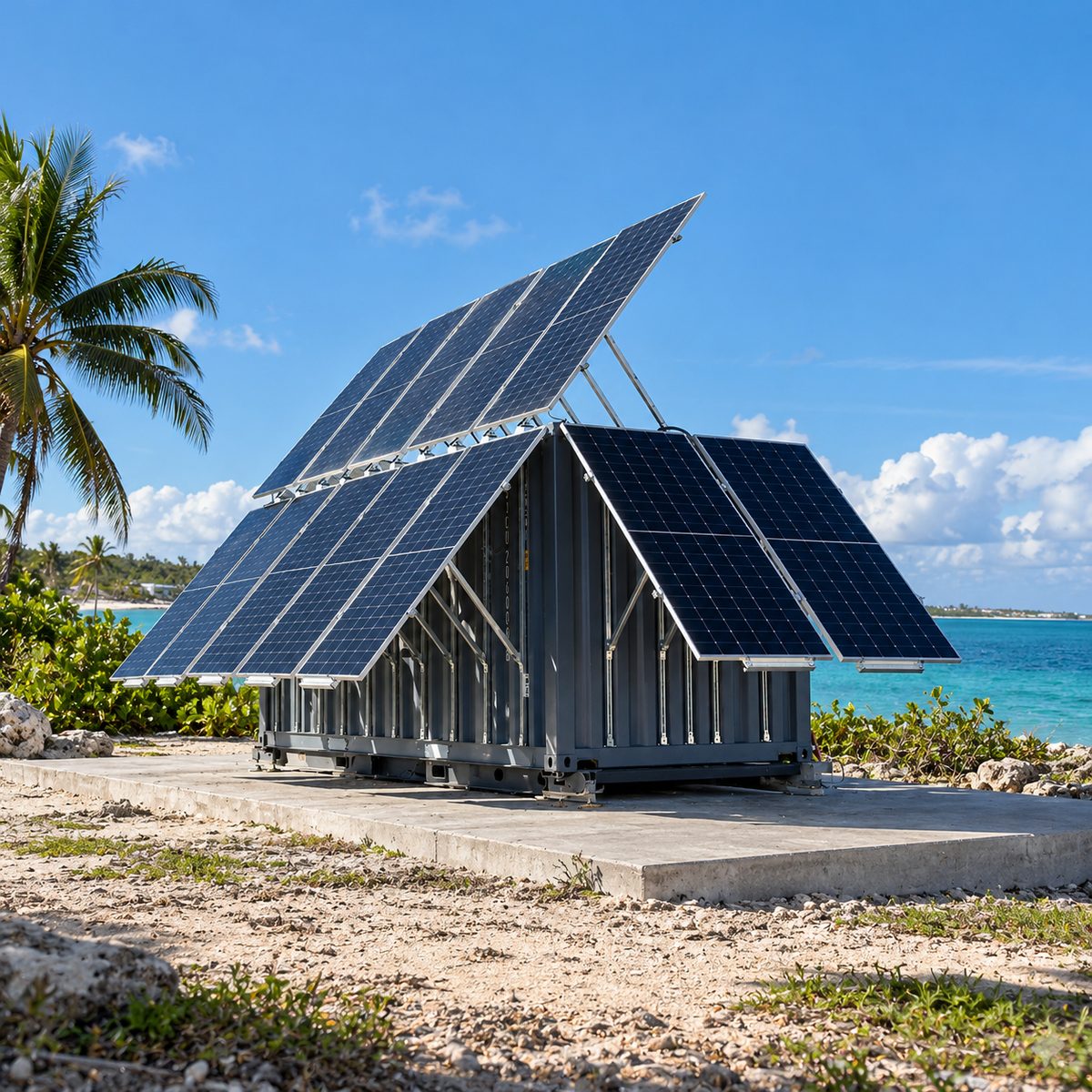
Solar arrays and outdoor equipment are vulnerable in high winds. Systems built for hurricane regions should stow quickly. On Trident 1, the solar array folds and stows and the container is secured before the storm. Afterward, the system redeploys in under two hours to restore water and power while the grid is still down.
Whatever equipment you use, write the stow procedure down, assign it to named staff, and rehearse it before the season. NOAA's Atlantic hurricane season runs from June 1 to November 30, so a May drill is a good habit.
A Pre-Season Checklist
- Confirm your critical-load list and daily kWh and water figures.
- Fill storage tanks and test water quality.
- Service filters, membranes and batteries, and stock spare consumables.
- Test the full stow-and-redeploy procedure with your team.
- Check remote monitoring and alerts, so you can see system status from off site.
- Agree on a communication plan for guests, staff and owners.
Recovery Is A Competitive Advantage
Properties that reopen first win the bookings, the insurance conversations and the goodwill of the community around them. Resilient water and power also cut diesel and delivered-water costs in the other ten months of the year, so the investment pays back even in a quiet season.