
Start With Energy, Not Panels
Every good solar and storage design starts with two numbers: how many kilowatt-hours your critical loads use in a day, and the highest power they draw at once. The first sizes the array and the battery. The second sizes the inverter.
List the loads that have to keep running during an outage, such as water treatment and pumping, refrigeration, communications, lighting and safety systems. Note each one's wattage and the hours it runs per day. A 1.5 kW pump that runs six hours a day uses 9 kWh. Add the lines up and you have your daily energy figure.
Size The Array From Your Sun Hours
Peak sun hours are the daily solar energy at your site, expressed as hours of full sun. Most of the Caribbean sees five to six. A simple first estimate for the array is:
Array size (kW) = daily energy (kWh) ÷ (peak sun hours × 0.75)
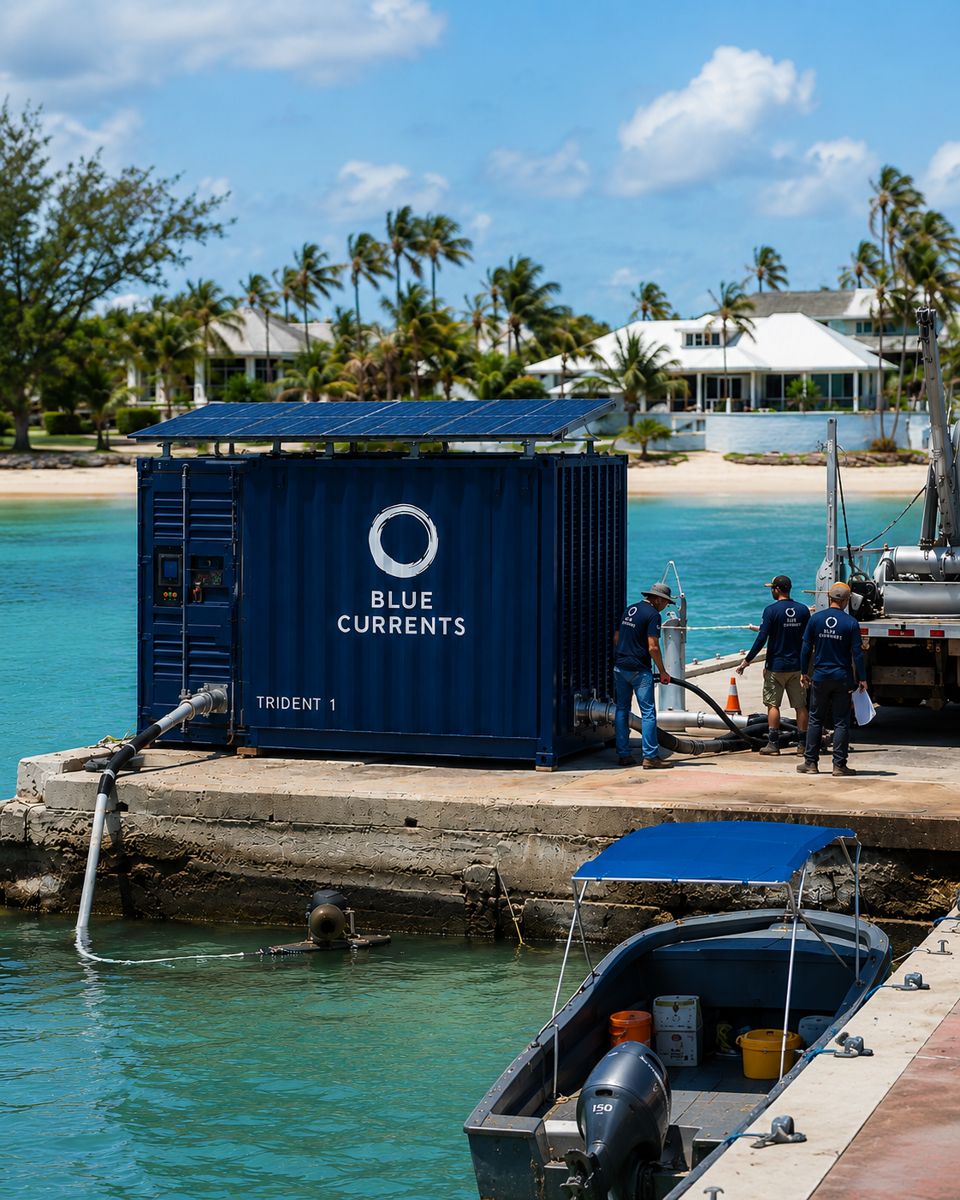
The 0.75 factor covers real-world losses from heat, dust, wiring, inverter conversion and battery round trips. A site that needs 20 kWh a day at 5.5 sun hours needs about a 4.8 kW array. That's why a 5.5 kW array, the size on Trident 1, covers a typical small critical load with some margin for cloudy days.
Size The Battery For The Night And The Bad Days
The battery carries the loads between sunset and sunrise, and through stretches of heavy cloud. Size it in three steps:
- Overnight energy: the share of your daily kWh used when the sun is down
- Days of autonomy: how many low-sun days you want to ride through without the generator, usually one to two
- Usable capacity: divide by the depth of discharge you plan to use, often 80% for lithium iron phosphate
A site that uses 12 kWh overnight and wants a day and a half of autonomy needs about 18 kWh usable, or roughly 22 kWh of rated battery. Trident 1's 30 kWh bank is sized with that kind of reserve in mind.
Why Lithium Iron Phosphate
Lithium iron phosphate (LFP) has become the standard chemistry for stationary storage. It is thermally stable, needs no watering or equalizing like lead-acid, and handles daily deep cycling. Manufacturers commonly rate LFP for around 6,000 cycles at 80% depth of discharge, which is more than 15 years of daily cycling on paper.
Heat is the main thing that shortens battery life in the tropics. Keep the bank shaded and ventilated, or in a conditioned enclosure, and let the battery management system limit charge and discharge at high temperatures.
Keep The Generator, Run It Less
Most resilient sites keep a diesel generator, but its job changes. Diesel engines are least efficient at light load. Run below about 30% of capacity, they waste fuel and suffer wet stacking, where unburned fuel builds up in the exhaust. One published consumption chart puts a generator at quarter load at about 34% more fuel per kWh than at full load.
With a battery in the system, the generator only starts when the battery runs low, runs at an efficient load to recharge it, then shuts off. That cuts run hours, fuel deliveries and maintenance, and the fuel you do store lasts longer when supply lines are cut.
Storage Keeps Getting Cheaper
BloombergNEF's 2025 survey found that average battery pack prices for stationary storage fell to $70 per kWh, 45% lower than in 2024. Pack prices are only part of a finished system, which also includes inverters, controls, enclosure, installation and commissioning. Still, the trend means storage that once made sense only for remote sites now pays back on many grid-connected properties too.
Plan For The Storm
Solar arrays catch wind. In hurricane regions, choose mounting rated for local wind loads, or an array that folds and stows. On Trident 1, the array stows before landfall and redeploys in under two hours afterward. Write the procedure down and practice it before the season.
A Quick Sizing Worksheet
- List critical loads with wattage and daily run hours. Total the kWh per day and the peak kW.
- Find your peak sun hours, and divide daily kWh by sun hours × 0.75 to size the array.
- Estimate overnight kWh, multiply by your days of autonomy, and divide by 0.8 to size the battery.
- Size the inverter above your peak kW, with headroom for motor starting.
- Decide what the generator covers, and set it to start only when the battery is low.
- Add monitoring, so you can see production, battery charge and alarms from off site.